Buying high-quality chicken is the first step toward serving a delicious meal, but proper storage is just as important. Whether you're cooking tonight or stocking up for later, knowing how to properly store raw chicken helps preserve freshness, prevent cross-contamination, and reduce food waste.
At Springer Mountain Farms, our chicken is 100% all-natural, American Humane Certified ™, and No Antibiotics Ever. Following safe storage practices helps ensure you enjoy the quality of every package from the time you bring it home until it reaches your table.
In this guide, we'll cover:
- How to store raw chicken in the refrigerator
- How to freeze chicken correctly
- How long raw chicken stays fresh
- Tips to prevent cross-contamination
- Common storage mistakes to avoid
Why Proper Chicken Storage Matters
Safe raw chicken storage helps:
- Keep chicken fresher longer
- Prevent leaks and spills
- Reduce the risk of cross-contamination
- Maintain flavor and texture
- Reduce unnecessary food waste
The good news? Proper storage only takes a few simple steps.
How to Store Raw Chicken in the Refrigerator
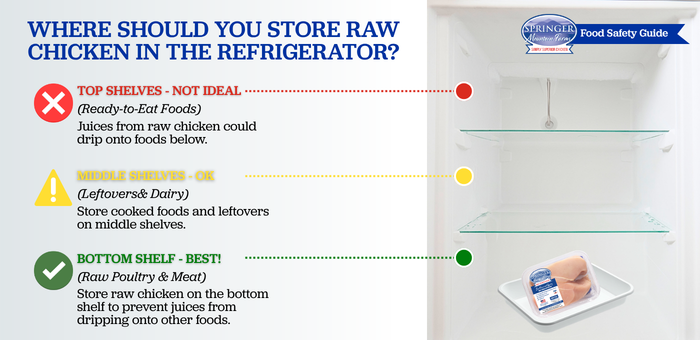
If you plan to cook your chicken within the next day or two, refrigeration is the best option.
Best Practices
✔ Keep chicken in its original unopened packaging.
✔ Place the package on a plate, tray, or in a shallow container to catch any accidental drips.
✔ Store it on the bottom shelf of your refrigerator where juices cannot drip onto produce or ready-to-eat foods.
✔ Keep your refrigerator at 40°F or below.
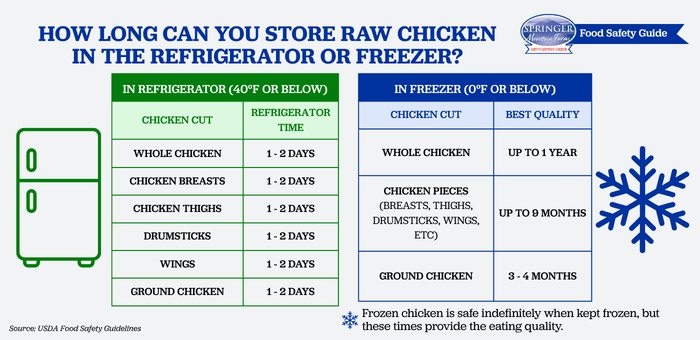
Refrigerator Storage Times
| Chicken Cut | Refrigerator Time |
|---|---|
| Whole chicken | 1–2 days |
| Chicken breasts | 1–2 days |
| Chicken thighs | 1–2 days |
| Drumsticks | 1–2 days |
| Wings | 1–2 days |
| Ground chicken | 1–2 days |
If you're not planning to cook your chicken within two days, freezing is the safest option.
How to Store Raw Chicken in the Freezer
Freezing preserves quality and extends shelf life.
For best results:
- Freeze chicken before the "use by" date.
- Leave unopened packages sealed.
- If repackaging, use freezer-safe bags or airtight containers.
- Remove as much air as possible to reduce freezer burn.
- Label packages with the freezing date.
Recommended Freezer Storage Times
| Chicken Cut | Best Quality |
|---|---|
| Whole chicken | Up to 1 year |
| Chicken pieces | Up to 9 months |
| Ground chicken | 3–4 months |
Although frozen chicken remains safe indefinitely when kept frozen, these timeframes provide the best eating quality.
Prevent Cross-Contamination
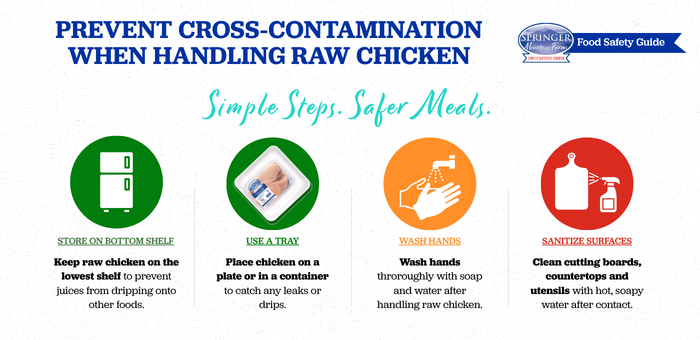
One of the most important parts of storing raw chicken is preventing its juices from contacting other foods.
Follow these simple tips:
- Store raw chicken below ready-to-eat foods.
- Keep chicken sealed until ready to cook.
- Never place cooked food back onto plates that previously held raw chicken.
- Wash hands thoroughly after handling raw poultry.
- Clean cutting boards, countertops, and utensils with hot, soapy water after contact with raw chicken.
These habits go a long way toward keeping your kitchen safe.
What If You Open the Package?
If you've opened the package but aren't cooking everything:
- Transfer unused chicken to an airtight container or resealable freezer bag.
- Refrigerate immediately.
- Cook within 1–2 days.
- If you won't use it soon, freeze it instead.
Avoid leaving raw chicken sitting out while preparing other ingredients.
Common Raw Chicken Storage Mistakes
❌ Leaving chicken in the car too long
Refrigerate within two hours—or within one hour if the temperature is above 90°F.
❌ Storing chicken on the top shelf
Any leaks could contaminate foods below.
❌ Refreezing thawed chicken improperly
If chicken was thawed in the refrigerator and has remained refrigerated, it can safely be refrozen, although some quality may be lost. Chicken thawed using cold water or the microwave should be cooked before refreezing.
❌ Forgetting to label frozen packages
Adding the date helps you use older packages first.
How to Tell If Raw Chicken Has Gone Bad
Even when properly stored, raw chicken doesn't stay fresh forever.
Signs it's time to discard it include:
- Sour or unpleasant odor
- Sticky or excessively slimy texture
- Gray, green, or unusual discoloration
- Packaging that is swollen or leaking
When in doubt, throw it out.
BONUS: Downloadable Cheat Sheet
Download our Raw Chicken Storage Cheat Sheet to keep it handy for quick reference.
Keep Great Chicken at Its Best
Proper storage helps protect both the quality of your chicken and the safety of your meals. By refrigerating or freezing chicken promptly, preventing cross-contamination, and following recommended storage times, you can enjoy every meal with confidence.
Whether you're meal prepping for the week or stocking the freezer, starting with high-quality chicken—and storing it correctly—makes all the difference.
Looking for more chicken food safety tips? Check out these helpful guides: